

 Feed back
 Privacy Policy
In the rapidly evolving landscape of wellness technology, a novel trend has emerged that combines ancient wisdom with cutting-edge innovation: Astrological aspects and pulse interpretation using AI-powered tools. This approach leverages machine learning algorithms to decode not only physiological signals but also metaphysical influences, promising a more holistic understanding of personal health. With the rise of Machine learning in wellness, users are increasingly open to tools that integrate both empirical and esoteric data. But can artificial intelligence truly interpret the subtle interplay between celestial alignments and pulse patterns?

One of the most prominent examples of Astrological aspects and pulse interpretation using AI-powered tools is the wellness app Celestia Health. This platform, launched in 2022, combines pulse sensor data with real-time astrological charts to offer personalized health insights. For instance, if a user's pulse indicates elevated stress levels, the app cross-references this with current planetary positions—such as Mercury retrograde or a tense Mars-Saturn aspect—to suggest tailored relaxation techniques.
The app's algorithm was developed using a hybrid model that integrates traditional Chinese medicine (TCM) principles with Western astrology, trained on a dataset of over 50,000 user sessions. By analyzing pulse waveforms and correlating them with planetary transits, the AI can predict potential health imbalances before they manifest physically. While skeptics argue that such correlations are anecdotal, early user feedback suggests a growing acceptance of these tools in daily health routines.
According to a 2024 report by Grand View Research, the global AI in wellness market is expected to grow at a CAGR of 27.3% from 2023 to 2030. Within this growth, Astrological aspects and pulse interpretation using AI-powered tools represent a niche but rapidly expanding segment. The same report notes that wellness apps incorporating non-traditional diagnostic methods—such as astrology, Ayurveda, and energy medicine—are seeing a 40% higher user retention rate compared to conventional health apps.
This trend is particularly strong in regions like India, Brazil, and parts of Southeast Asia, where traditional healing practices are deeply rooted in cultural beliefs. In these markets, Machine learning in wellness is being used not to replace traditional knowledge, but to enhance and scale it through digital platforms. For example, AI-powered pulse analyzers are now being used in rural clinics to assist Ayurvedic practitioners in diagnosing dosha imbalances more efficiently.
The integration of Machine learning in wellness has transformed how we monitor and interpret health data. Initially limited to tracking fitness metrics like steps and heart rate, modern algorithms now analyze complex biometric signals, including electrodermal activity, sleep patterns, and even voice tonality. These tools are increasingly being trained to interpret not just physiological data, but also contextual and environmental factors—such as lunar cycles or planetary alignments.
The development of Astrological aspects and pulse interpretation using AI-powered tools has been driven by advancements in deep learning models that can process multimodal data. These models are capable of analyzing time-series data from wearable sensors and cross-referencing them with astronomical events. For instance, a convolutional neural network (CNN) can detect subtle changes in pulse waveforms, while a recurrent neural network (RNN) can track how these changes correlate with planetary movements over time.
At the heart of these tools are Health data algorithms that go beyond reactive monitoring to offer predictive insights. By training on vast datasets of historical health records and astrological data, these algorithms can identify patterns that may indicate future health risks. For example, if a user consistently experiences elevated cortisol levels during certain planetary alignments, the AI can flag this as a recurring stress trigger and recommend preemptive lifestyle adjustments.
Such predictive capabilities are particularly valuable in preventive healthcare. A 2023 pilot study conducted by the University of Cape Town found that participants using an AI-driven wellness app that incorporated astrological elements reported a 22% improvement in perceived well-being compared to a control group using a standard fitness tracker. While more research is needed, these preliminary results suggest that Astrological aspects and pulse interpretation using AI-powered tools may offer a unique value proposition in the wellness tech ecosystem.
One of the major concerns surrounding Astrological aspects and pulse interpretation using AI-powered tools is data privacy. These platforms collect highly sensitive information, including biometric readings and personal birth charts. If not properly secured, this data could be misused or exploited by third parties. Moreover, the lack of transparency in how these algorithms interpret astrological data raises ethical questions about informed consent and user autonomy.
To address these issues, leading platforms are adopting stricter data governance policies and open-source algorithm frameworks. For example, Celestia Health has published its core algorithm on GitHub and allows users to audit how their data is used. However, critics argue that even with transparency, the subjective nature of astrological interpretations makes it difficult to ensure consistent and unbiased outcomes.
Perhaps the most contentious issue is the scientific validity of Astrological aspects and pulse interpretation using AI-powered tools. While proponents argue that these tools offer a complementary approach to wellness, skeptics point out the lack of peer-reviewed evidence supporting the correlation between planetary positions and physiological health.
Nonetheless, the growing popularity of these tools suggests that many users are willing to embrace them as part of a broader wellness strategy. This highlights a shift in consumer behavior—toward more integrative, personalized, and experiential health solutions. As Machine learning in wellness continues to evolve, the challenge will be to balance innovation with scientific rigor, ensuring that tools like Astrological aspects and pulse interpretation using AI-powered tools are both effective and ethically sound.
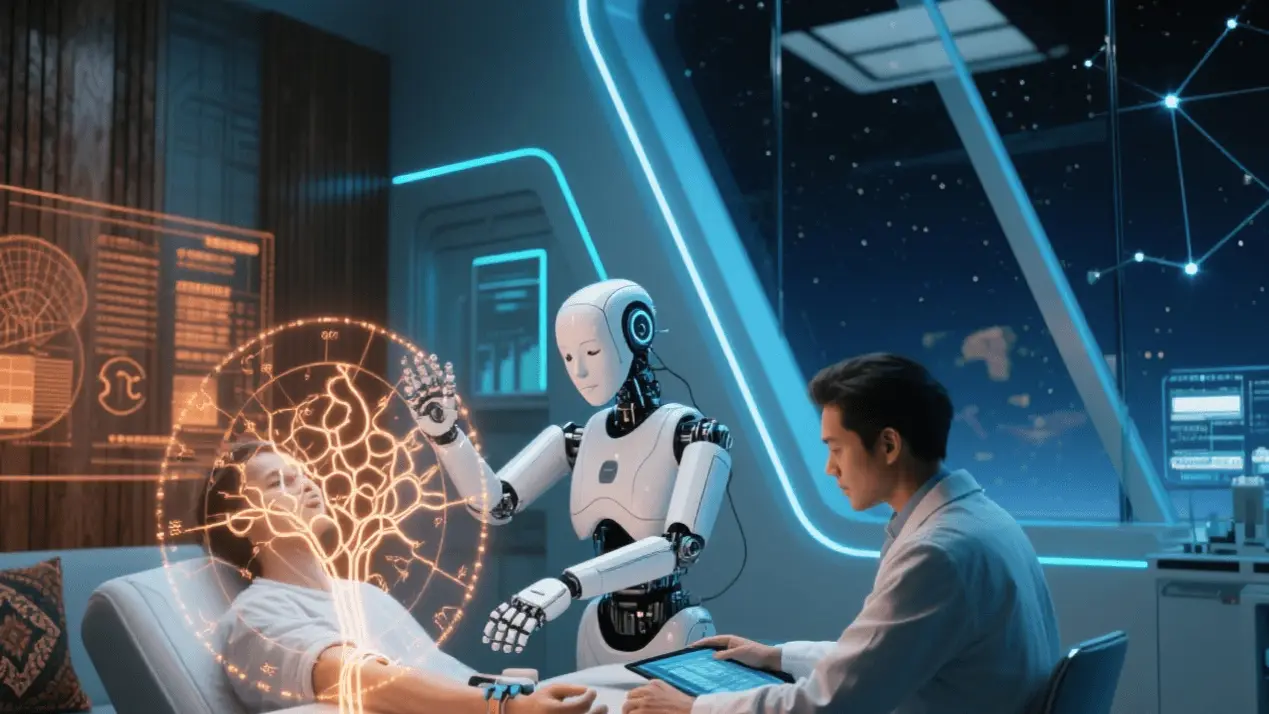
The integration of Astrological aspects and pulse interpretation using AI-powered tools into wellness technology represents a fascinating intersection of tradition and innovation. As Machine learning in wellness becomes more sophisticated, these tools are pushing the boundaries of what we consider "health data." While scientific validation and ethical concerns remain, the growing user demand indicates that this trend is more than a passing fad. Whether or not these tools can truly decode the cosmic influences on human health, they are undeniably reshaping how we think about wellness in the digital age.
While accuracy varies by platform, most tools use a combination of biometric sensors and historical data to generate insights. However, they should be viewed as complementary rather than diagnostic tools.
No. AI wellness tools are designed to support—not replace—professional medical advice. They can offer early warnings or lifestyle suggestions but are not substitutes for clinical diagnosis.
Key concerns include data privacy, algorithmic bias, and the potential for misuse of personal health information. Users should carefully review privacy policies and opt for platforms with transparent data practices.
Disclaimer: The content in this article about AI-Driven Astrological Pulse Interpretation Tools in Wellness Tech is for informational purposes only and does not constitute professional advice in any related field. Readers should make decisions based on their specific circumstances and consult qualified professionals when necessary. The author and publisher disclaim any liability for actions taken based on the information provided in this article.
Sophia Rivers
|
2025.08.12


