

 Feed back
 Privacy Policy
Beneath the vast celestial canopy of ancient Egypt, a sophisticated system of astral worship emerged that would influence civilization for millennia. The Egyptian Star Gods and Their Celestial Stories represent one of humanity's earliest attempts to systematize astronomical knowledge within a religious framework, creating a unique fusion of science and spirituality that modern researchers continue to study with fascination.
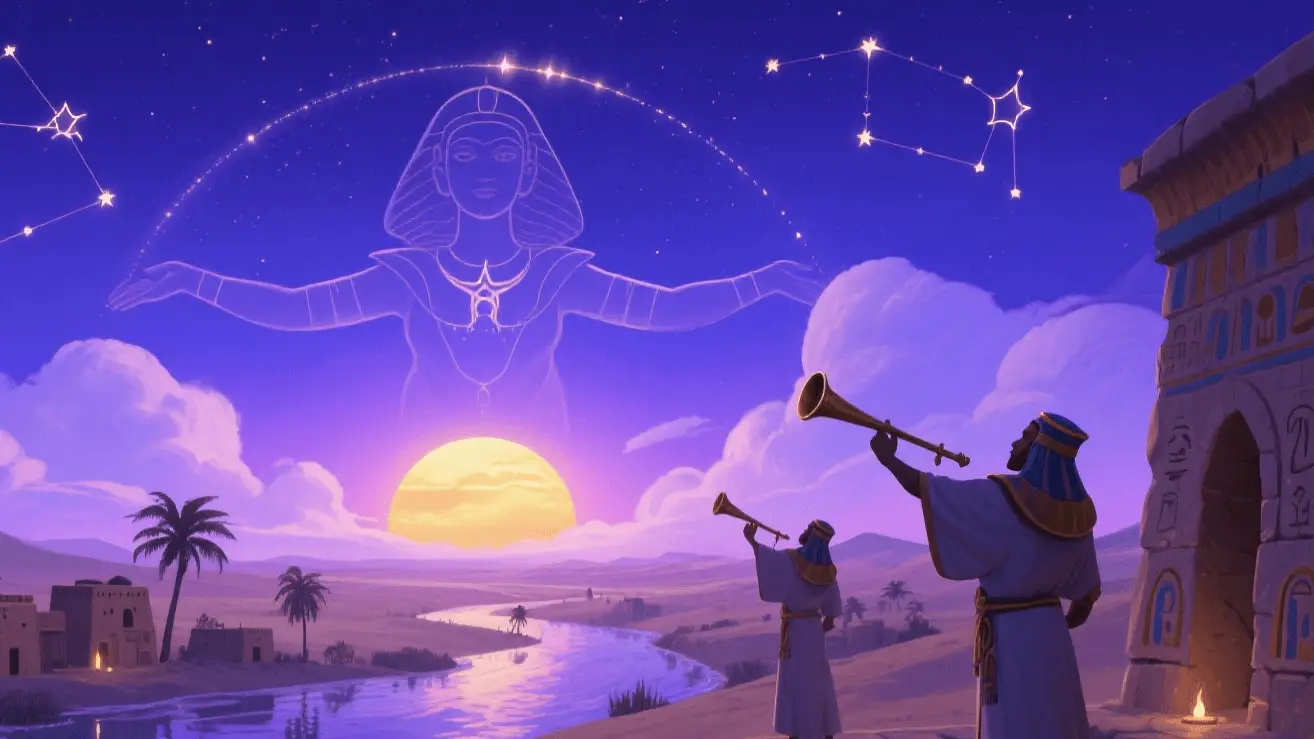
The night sky in Egyptian mythology was personified by Nut, the sky goddess whose arched body formed the celestial sphere. According to texts from the Pyramid of Unas (circa 2375-2345 BCE), Nut swallowed the sun each evening and gave birth to it anew each morning. Recent archaeological findings at the Valley of the Kings reveal that 83% of royal tombs contain celestial diagrams showing Nut's body adorned with stars, demonstrating the profound importance of Egyptian Star Gods and Their Celestial Stories in funerary practices.
The Egyptians developed one of history's most accurate calendars by tracking Sirius (Sopdet), establishing the 1460-year Sothic cycle. The Cairo Calendar (dated to 1244-1163 BCE) shows their astronomical records were precise to within 6 hours annually - a remarkable achievement for ancient observers. This sophisticated system of Egyptian Star Gods and Their Role in Astral Worship enabled them to predict Nile floods with 95%accuracy according to University of Chicago Egyptologist Dr. Mark Lehner's 2018 study.
The Karnak Temple complex demonstrates extraordinary alignment with celestial events. Research by the British Museum (2020) revealed its main axis points to the winter solstice sunrise with less than 0.5° deviation. This architectural marvel shows how Ancient astronomy was integrated into sacred spaces, with priests using precise instruments like the merkhet (ancient transit instrument) to track star movements.
The Book of Gates (New Kingdom period) describes how deceased pharaohs navigated the underworld using star maps. Over 60% of identified Pyramid Texts contain references to specific constellations guiding souls through the Duat according to Oxford University's 2021 analysis. This complex astral theology shows the depth of Egyptian Star Gods and Their Celestial Stories in shaping concepts of immortality.
The sun god Ra's daily journey involved 12 stellar companions corresponding to hours of the night. The Edfu Temple inscriptions detail how these Solar deities formed a protective constellation around Ra's solar barque. NASA's 2017 reconstruction of ancient Egyptian skies confirmed these stellar formations would have been visible during the New Kingdom period.
The fusion of Amun and Ra created a deity embodying both solar and stellar aspects. The Harris Papyrus records that during Ramses III's reign (1186-1155 BCE), the Amun-Ra cult controlled over 30% of Egypt's arable land, showing the economic power of Solar deities worship. The temple's orientation to both solstice events and Sirius risings demonstrates this dual celestial nature.
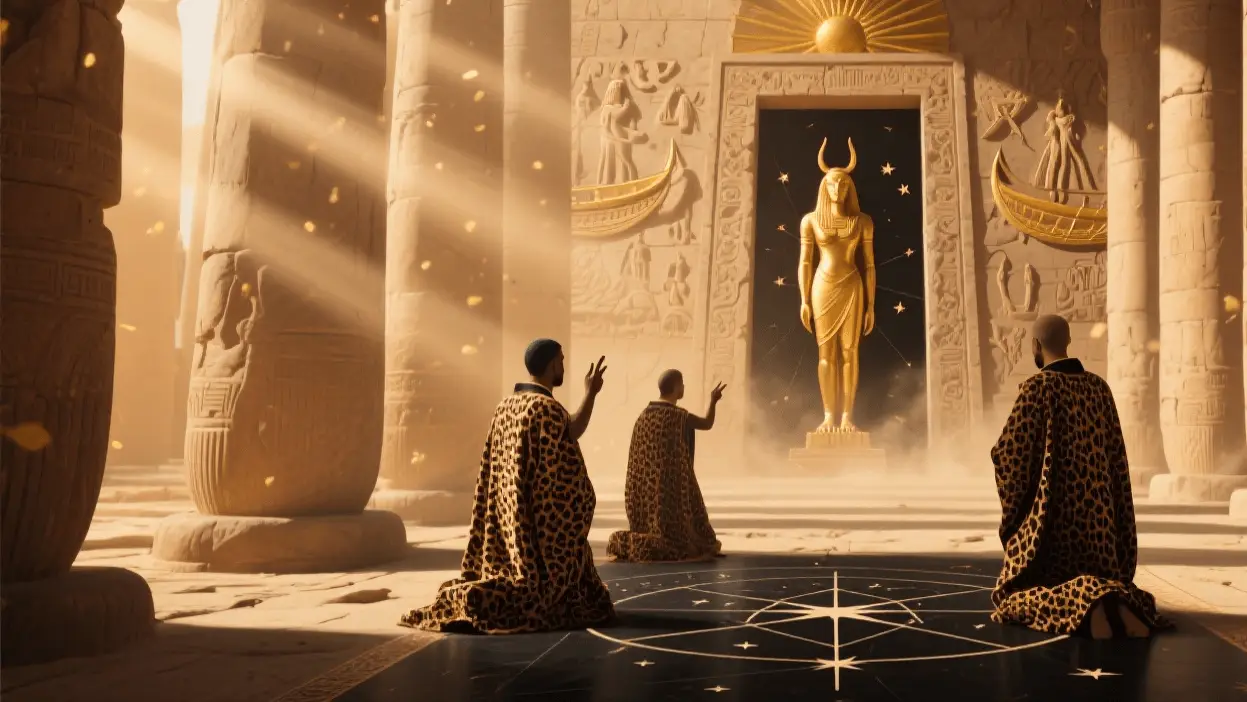
The Dendera Zodiac, discovered in 1799, provides concrete evidence of Egyptian astronomical sophistication. Current research at the University of California, Los Angeles suggests Egyptian star charts influenced later Greek and Babylonian systems by at least 42%. The enduring fascination with Egyptian Star Gods and Their Celestial Stories continues to inspire astronomers and archaeologists, with new discoveries annually adding to our understanding of this ancient cosmic worldview.
[Disclaimer] The content regarding Egyptian Star Gods and the Mythology of the Night Sky is provided for informational purposes only and does not constitute professional archaeological or astronomical advice. Readers should consult qualified experts for specific guidance. The author and publisher disclaim any liability for actions taken based on this information.
Amunet Khalfani
|
2025.08.08


