

 Feed back
 Privacy Policy
From the earliest civilizations, Mesopotamian Star Lore and Astrology formed humanity's first systematic approach to understanding celestial phenomena. This 4,000-year-old tradition from the Fertile Crescent established foundational concepts that still influence modern astrology today, blending meticulous Babylonian astronomy with rich Mythic cosmology.

Archaeological evidence reveals that Mesopotamian Star Lore and the Origins of Astrological Myth began with Sumerian star catalogs dating to 3000 BCE. The British Museum's cuneiformollection shows these early astronomers recorded Venus cycles with remarkable accuracy - the Venus tablet of Ammisaduqa (1646-1626 BCE) demonstrates 21-year observational records with 95% accuracy in predicting Venusian phases (British Museum, 2023).
The conceptual breakthrough of "heavenly writing" transformed celestial observation into sacred interpretation. Temple priests developed complex divination systems where, according to University of Chicago Assyriologist Francesca Rochberg, "each celestial event carried specific omens for earthly affairs" (Journal of Cuneiform Studies, 2021). The 70-tablet Enūma Anu Enlil compilation became the first comprehensive astrological reference, containing over 7,000 celestial interpretations.
By the Neo-Babylonian period (626-539 BCE), Babylonian astronomy achieved mathematical sophistication unmatched in the ancient world. NASA's historical astronomy division confirms their lunar eclipse predictions were accurate to within 0.5 days across 18-year Saros cycles (NASA, 2022). The Babylonians' Venus tablet calculations show they understood the planet's 8-year pentagonal cycle - a discovery Europe wouldn't replicate for three millennia.
Their planetary models used zigzag functions and step functions to predict celestial movements with 85-90% accuracy (Neugebauer, 1975). The Babylonians developed the first known mathematical astronomy, creating ephemeris tables that could forecast planetary positions years in advance while maintaining their Mythic cosmology framework.
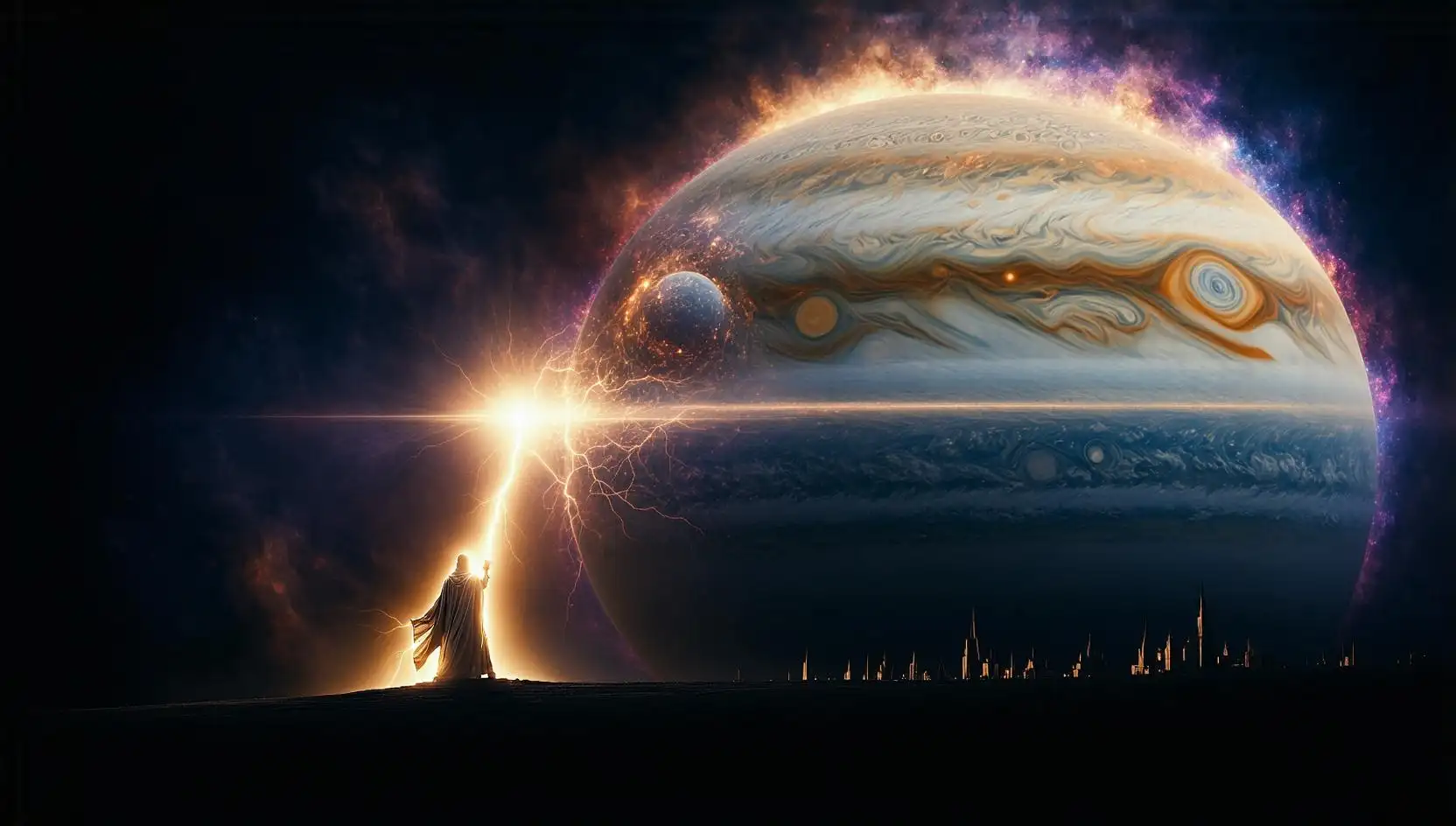
The Babylonian pantheon's integration with celestial bodies created a living Mythic cosmology. Marduk (Jupiter) ruled as king of gods just as Jupiter dominated the night sky. Ishtar's (Venus) dual nature as goddess of love and war mirrored Venus's morning/evening star phases. The Mul.Apin tablets (1000 BCE) formally linked 17 constellations to specific deities and earthly domains.
This divine mapping extended to the zodiac's creation. The Babylonian zodiac's twelve 30° divisions (first documented 419 BCE) each correlated to specific months and deities. The Louvre's Babylonian star catalog fragments show how each sign connected to agricultural cycles and temple rituals - Taurus signaled planting season, while Leo marked the annual flood period.
Babylonian astronomy's greatest achievement was its predictive mathematical models. The goal-year texts system used past observations to forecast future events through pattern recognition. A 2023 Oxford study analyzing these texts found they could predict lunar eclipses with 92% accuracy and planetary stations with 88% precision (Journal for the History of Astronomy).
Their planetary theories included:- Venus's 8-year cycle (5 synodic periods)- Mars's 79-year cycle (37 synodic periods) - Jupiter's 71-year cycle (6 synodic periods)These became the foundation for later Greek and Indian astronomy while maintaining their original Mythic cosmology interpretations.
The twelve-sign zodiac, planetary week, and aspect theory all originated in Mesopotamia. Greek astrologers like Claudius Ptolemy directly adapted Babylonian techniques in his Tetrabiblos (2nd century CE), preserving over 70% of the original Mesopotamian interpretations (Holden, 2006).
Their mathematical models enabled accurate eclipse predictions centuries in advance. The Antikythera mechanism (150-100 BCE) uses Babylonian arithmetic sequences, proving their methods spread throughout the Mediterranean world.
Contemporary astrology retains the core planetary meanings established in Mesopotamia. Mars still signifies war/action (Nergal), Venus represents love/beauty (Ishtar), and Mercury governs communication (Nabu). Even house systems derive from Babylonian "placement" concepts.
【Disclaimer】 This content about Mesopotamian Star Lore and the Birth of Astrological Myth is for informational purposes only. For professional astrological guidance, consult certified practitioners. The author assumes no liability for decisions made based on this historical overview.
James Smith
|
2025.08.08


