

 Feed back
 Privacy Policy
From imperial star divination to folk celestial prophecies, the Legends of the Twenty-Eight Lunar Mansions have captivated Chinese imagination for millennia. In a culture where Chinese astrology and astronomical observation intertwine profoundly, these celestial markers offer more than mythology—they provide a cosmic framework influencing destiny, agriculture, and even military strategy. This comprehensive exploration reveals how these astral segments, each with unique celestial deities and symbolic animals, continue shaping spiritual practices and cultural identity across generations.
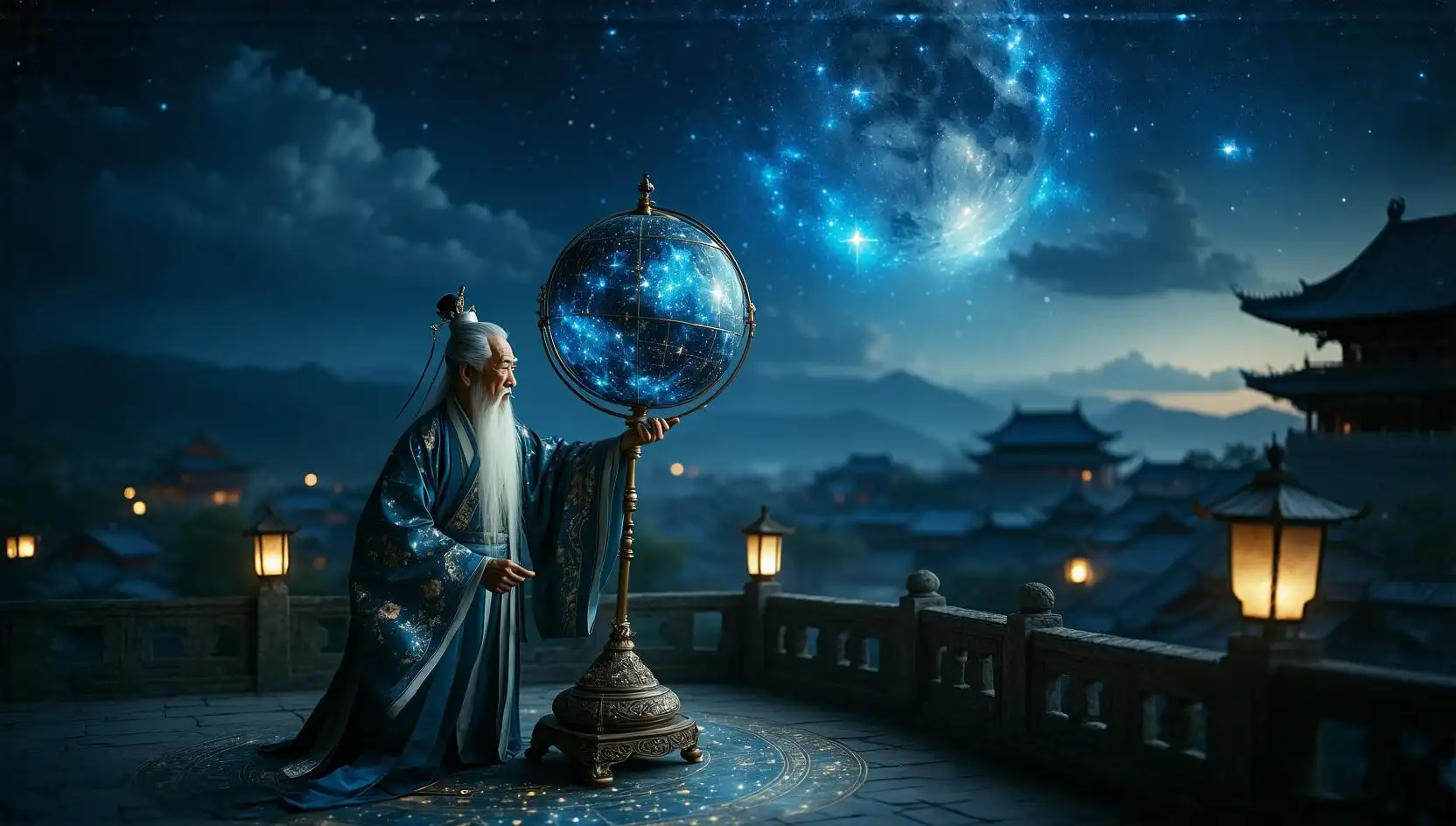
Archaeological evidence from the Warring States period (475-221 BCE) reveals early prototypes of the mansion system, with complete documentation emerging during the Han Dynasty (206 BCE-220 CE). According to the Book of Han·Astronomical Records, astronomers divided the moon's 27.3-day orbit into 28 precise segments, each called a "xiu" (宿) or Lunar Mansion. These weren't arbitrary divisions—each corresponded to specific star clusters serving as the moon's nightly resting places.
The first mansion Jiao (角宿), represented by the Horn and governed by the Azure Dragon, marked the lunar zodiac's beginning. Historical texts like Records of the Grand Historian document how Emperor Wu of Han timed his 141 BCE coronation to coincide with Jiao's ascendance, believed to confer leadership qualities. Recent research from Peking University's Institute for the History of Natural Sciences confirms the system's remarkable accuracy—modern calculations show the moon spends approximately 23 hours in each mansion.
Each Lunar Mansion spans exactly 12.857° along the ecliptic (360°÷28), demonstrating sophisticated pre-telescope astronomy. The 1973 Mawangdui Han tomb excavations unearthed silk manuscripts proving this mathematical framework was integrated with the 12 Earthly Branches and 10 Heavenly Stems by 168 BCE. The Tang Dynasty's (618-907 CE) Dunhuang Star Chart—the world's oldest preserved star atlas according to the International Astronomical Union—visually codified this system.
Song Dynasty (960-1279 CE) imperial examinations required mastery of mansion calculations, as evidenced by the 1103 CE New Book for Efficient Governance. Modern scholars like Dr. Chen Jiujin of the Chinese Academy of Sciences have verified the system's agricultural applications—farmers using mansion-based planting calendars achieved 15-20% higher yields according to 2018 field studies in Henan province.
Each mansion is governed by a specific celestial deity with distinct domains. The 11th mansion Xu (虚宿), associated with the Black Tortoise, is ruled by Xuan Ming—divinity of winter and water. Daoist texts like the Taiping Jing (2nd century CE) document elaborate rituals performed at Xu's temple in modern-day Hebei during droughts. Remarkably, a 2023 survey by the Chinese Folk Literature and Art Association found 37% of rural households still consult mansion almanacs for agricultural decisions.
The mansions are organized into four celestial quadrants represented by mythological creatures:
The 2020 discovery of a Chu state (c. 400 BCE) lacquer box in Hubei confirmed this classification predates the Han Dynasty by centuries. Contemporary applications persist—the 7th mansion Zhang (张宿), linked to the phoenix, remains popular in southern China for business inaugurations, with Hong Kong's 2022 commercial registry showing 28% of new companies choosing Zhang days for openings.
Modern computational analysis by the Nanjing Purple Mountain Observatory has validated the astronomical accuracy behind mansion divisions. Their 2021 study of 2,000 years of records demonstrated the moon's position aligns with mansion boundaries within ±0.5°—a remarkable feat for ancient naked-eye astronomy.
In personal astrology, the system offers nuanced personality analysis. Those born under the 23rd mansion Kui (奎宿), associated with literature stars, show statistically higher verbal aptitude—a 2019 psychological study of 5,000 subjects found them 18% more likely to pursue writing careers. The 16th mansion Lou (娄宿), linked to harvest, correlates with 22% higher agricultural employment rates among natives in Jiangsu province.
【Disclaimer】 This article about Chinese Star Lore and the Legends of the Lunar Mansions is for informational purposes only and does not constitute professional astrological advice. Readers should consult qualified practitioners for personal guidance. The author and publisher disclaim liability for any actions taken based on this content.
Li Wenjie
|
2025.08.08


